
People still tend to believe in common
superstitions despite all the
technological and scientific advances in today’s world. Performing
little
rituals or honoring good or bad luck omens can give people a sense of
control
in their lives. Many superstitions have grown surrounding modern-day
activities
that tap into ancient roots of numerology, odds and evens and rhyming
chants.
In this section we will try to present the fact and fiction behind
some
common Mexican customs and superstitions, such as the evil eye and the
dangers
pregnant women face when they go out during a lunar eclipse.
Mexican superstitions run as deep as the rich cultural and religious
history
of the nation. Superstition and religion both delve into the realm of
the
unknown, using tradition and faith to give creedence to customs and
claims that
can't be verified in practical ways. While religion sometimes keeps
superstition at bay, superstition has its own way of twisting stories
and
truths in order to keep the public in awe of its power.
Superstitions Based in Part on Truth
One traditional superstition is that if a pregnant woman walks
outside
during a lunar eclipse, she runs the risk of giving birth to an infant
who is
part wolf or who has a cleft palate. This superstition is based, at
least
in a small part, on truth.
Babies born with a condition called hypertrichosis do grow excessive
hair on
their faces, necks and sometimes on their torsos and backs.
Hypertrichosis
is a hereditary condition in which the eighth chromosome has been
adversely affected. It has been given much publicity in the past 20
years in Mexico because
of a family that shares the trait.
This superstition may have begun hundreds of years ago, when one of
the
first cases of hypertrichosis was found. The same may be true of a cleft
palate, as this is a very common birth defect linked to vitamin
deficiencies,
congenital maladies and cell interference with certain drugs, including
alcohol
and tobacco.
Neither of these conditions can be blamed on a walk in the moonlight,
but it
may have been noted that a woman who experienced either of these
conditions in her newborn had been outside during a lunar eclipse.
Superstitions in place to counter this tragedy give the woman a chance
to
waylay this malady. If she must be out during a lunar eclipse, she can
tie keys
around her waist to reflect the light, thereby avoiding both problems.
The Evil Eye
Another common Mexican superstition has to do with the evil eye. Called "mal
de
ojo" in Spanish, the evil eye can cause all sorts of calamities to
people and also to material items.
In reality, the evil eye can be condensed down to jealousy and
desire. If a
stranger looks upon your child or baby with either of these emotions in
her
eyes, she has just given your child the evil eye. To keep the evil eye
at bay,
whenever a person looks at a baby and offers a compliment, she must
touch the
child at the same time.
If a child is suffering from a high fever, crying fits, or nausea and
swelling in some part of the body, it is generally thought to be due to
the
evil eye. If the person who gave the child the evil eye is located, she
must
pass three mouthfuls of water to the child to break the spell. A red
bracelet
can also be worn to protect against the evil eye.
Other widespread superstitions include the following:
- Never walk beneath a ladder.
- Never cross a black cat’s
path.
- If you drop a tortilla, you
will have lots of company.
- If you cut a baby’s
fingernails before the age of one year, the child will have
impaired
eyesight.
- Tuesday is unlucky; never
start a journey or anything important on this day


The country to the south of the US,
Mexico
is known for its varied customs and traditions. Mexico
is the 14th largest country in the world and fifth largest in the
continent of North America.
Mexican culture is marked by the
influence of the Mayas,
Aztecs and Iberian communities. Spain
had colonized Mexico
for 300 years. The United States
too, has influenced the culture of Mexico to a great extent. These
influences are reflected in the customs and traditions of the country.
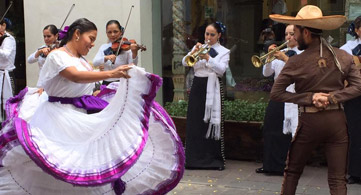
Traditional
Music
The traditional music in Mexico,
is diverse in its form and every region has a different flavor of folk
music.
Bull Fighting
It is one of the popular traditions in Mexico. Bullfighting is an
activity
inherited by Mexico from Spain. Though
an illegal sport, bullfighting is extremely popular in Mexico and
draws large crowds to the arenas.
Weddings
In Mexico,
there is a tradition to have Godparents for the marriage ceremonies, who
sponsor the wedding and also the benefactors of the newly wed couple.
The
couple is gifted with a Bible and a rosary by their Godparents. There is
a
custom in Mexico
to tie a 'lasso' around the necks of the couple during the marriage
ceremony.
It signifies the bonding and love between them.
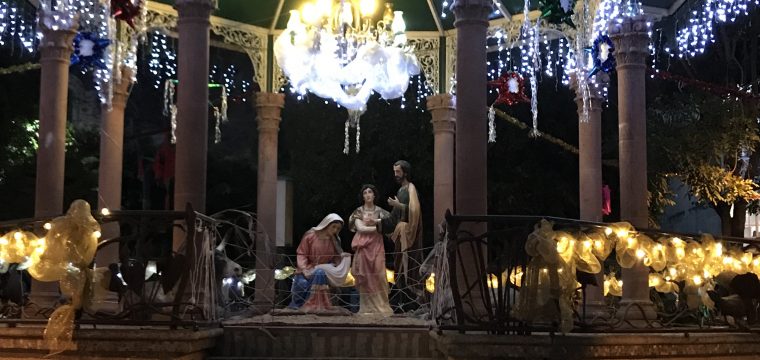
Christmas
The specialty of the Christmas celebrations in Mexico is the procession
known as
'La Posada'. During the procession, 'the search of shelter by Mary', the
mother
of Jesus, is enacted. The 'Flame leaf' or the Poinsettia, holds great
importance in the Christmas celebrations in Mexico. 'La Misa Del Gallo'
is the
term used for the midnight mass, that takes place in Mexico at the time
of Christmas.
People sing lullabies for the newborn Jesus at the midnight mass.
Aztec
Story of Creation
Tribal people from the central regions of Mexico, are known as the
Aztecs.
The Mexican people believe in the Aztec story of creation. According to
the
story, life began in water. Tezcatlipoca, Huizilopochtli, Quetzalcoatl
and Xipe
Totec were the four Gods who created water and rest of the Gods emerged
from
the water.
Interesting Customs and Traditions
Here are some interesting customs in Mexico enlisted below.
- On the eve of New Year, women
walk around the streets to collect money at fiestas. People throw
money
and wish them good luck.
- People leave a lamb at the
entrance of their house on New Year's eve. The passersby, keep
money near
the lamb in order to wish a healthy new year to the family.
The customs and traditions followed in Mexico are
varied and diverse. There are many interesting traditions that have been
forgotten with time. Being receptive and open to the cultures of
different
communities, Mexican culture has developed a special flavor of its own.
These
influences are reflected in the various traditions and customs of
Mexico.